 BRIAN & RUTH
Bias #1 · Anchoring
Why do we take the first offer?
The first number you hear becomes your measuring stick.
What happened to Brian
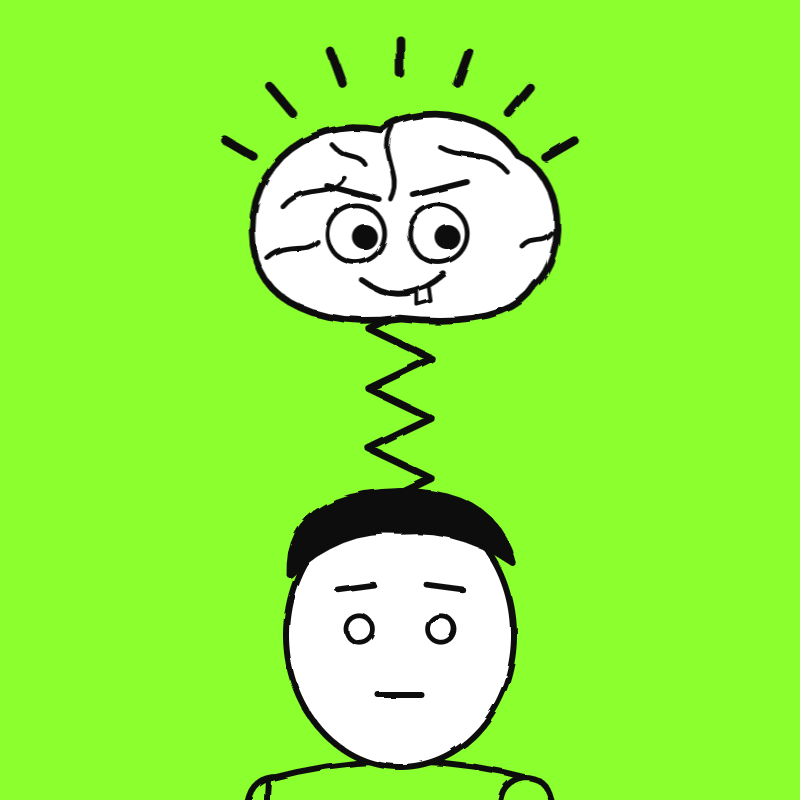
Brian gets his first job offer: 40,000. He wants to say yes before they change their mind. That number now decides what feels "fair" to him, whatever the job is really worth.
The study
In 1974, Amos Tversky and Daniel Kahneman spun a wheel rigged to stop on 10 or on 65, then asked people what percent of African countries are in the UN. A random number should change nothing. Yet the middle guess of the group that saw 65 was 45%, against 25% for the group that saw 10: almost double.
Know the range before the conversation, then put your number on the table first. Now yours is the anchor.
And with AI?
Soon AI will make our offers, pick our news and plan our days. If one random number can steer us, what can a machine that knows our weak spots do? Are we prepared for a full AI life? Tell us in the comments on YouTube, Instagram or TikTok.
Source: Tversky, A., & Kahneman, D. (1974). Judgment under Uncertainty: Heuristics and Biases. Science, 185(4157), 1124-1131. Read the study (Science)